

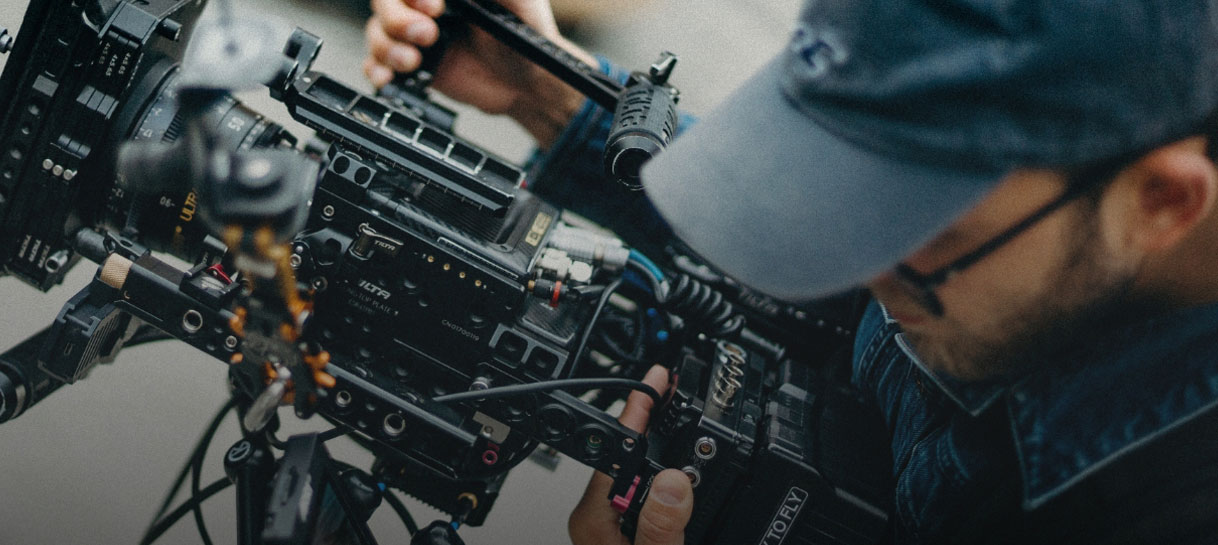
Film vs. Digital: Why the Industry Made the Shift
Lorem ipsum dolor sit amet, consectetur adipiscing elit, sed do eiusmod tempor incididunt ut laborat re et doloremagnaliqua. Et netus et malesuada fames ac turpis egestas. Faucibus interdum posuere lorem ipsum dolor sit. Vulputate pharetra sit ametium aliquam.
”Lorem ipsum dolor sit amet, consecvest adipiscing elit, sed do eiusmod.”
The debate between shooting on film and shooting digitally isn’t new — but the conclusion has quietly settled.
Today, digital acquisition isn’t just an alternative to film. In many cases, it’s the practical, logistical, and contractual requirement. That shift didn’t happen because filmmakers stopped caring about image quality. It happened because digital technology matured to a point where it could support modern production realities without compromise.
Over the past two decades, manufacturers like ARRI, RED Digital Cinema, Sony, and Blackmagic Design didn’t just replace film — they elevated digital cinematography into a first-class format.
The reasons are practical, measurable, and difficult to ignore.
Cost Is the Obvious Factor — But Not the Only One
Shooting on film carries inherent expenses: stock, processing, scanning, shipping, and lab availability. While those costs can be justified creatively, they compound quickly and affect scheduling, shooting ratios, and contingency planning.
Digital acquisition removes many of those variables. Media can be reused. Footage can be reviewed immediately. Mistakes are identified faster. Time once spent waiting for dailies is now spent making decisions on set.
For low- and mid-budget productions, that difference isn’t marginal — it’s often the difference between finishing the film or not.
Workflow Has Changed the Equation
Modern productions are no longer linear. Editorial, visual effects, color, and delivery are deeply interconnected, often happening simultaneously. Digital formats integrate directly into this pipeline.
High-resolution RAW and log formats allow cinematographers to retain dynamic range while giving post-production teams flexibility without destructive processing. LUTs, color management, and real-time monitoring allow creative intent to be protected from set through final delivery.
In many cases, shooting digitally doesn’t just save money — it prevents friction.
Distribution Now Demands Digital
One of the least romantic but most decisive factors is delivery.
Streamers, broadcasters, and distributors increasingly require digital masters, specific codecs, metadata, and color spaces that originate most efficiently from digital acquisition. Film-originated projects still end up scanned, conformed, and delivered digitally.
At a certain point, starting digitally isn’t a creative concession — it’s alignment with the reality of how films are finished and exhibited.
Reliability, Speed, and Scale
Digital cameras have also changed what’s possible on set.
Smaller camera bodies allow for faster setups, tighter spaces, longer takes, and reduced crew footprint. Low-light performance has expanded shooting windows and location options. Backup media and redundancy reduce risk.
These aren’t aesthetic arguments — they’re operational ones.
When schedules are tight and margins are thin, reliability matters.
Film Isn’t Gone — But the Decision Is Now Intentional
Film still exists, and it still serves specific projects beautifully. When filmmakers choose it today, it’s a deliberate creative decision — not a default.
That distinction matters.
Digital cinematography didn’t win because it was cheaper. It won because it became good enough, flexible enough, and dependable enough to support modern filmmaking at every level.
The shift wasn’t about abandoning tradition.
It was about adapting to reality.
And for many productions today, digital isn’t just preferred — it’s the format that makes the work possible.
A Practical Evolution
The tools didn’t replace the craft — they expanded it. What matters now isn’t whether a project was shot on film or digital, but whether the format chosen served the story, the crew, and the process.
The question isn’t what’s better.
It’s what makes the film possible.