

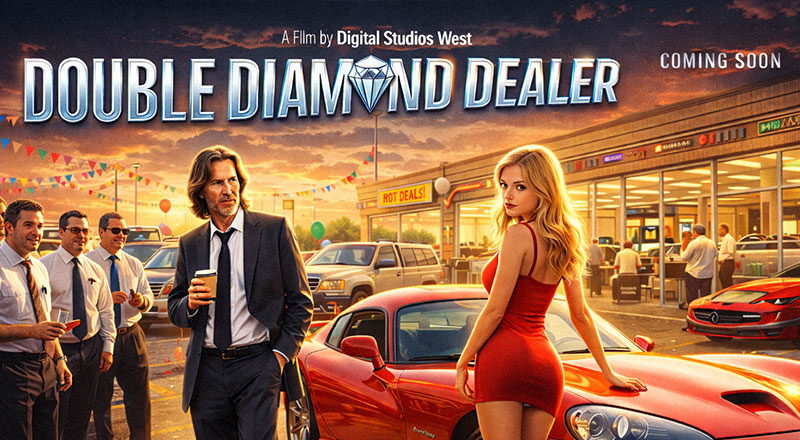
Screenplay Spotlight (2009): Double Diamond Dealer
In 2009, Digital Studios West founder Paul Sadler wrote Double Diamond Dealer, a dark comedy inspired by his early years working in and around car dealerships during the loud, chaotic, pre-digital 1990s.
”The ’90s car business was already a movie — I just wrote down what I remembered and turned the volume up.”
It was a strange era — flashy cars, louder personalities, questionable ethics, and an almost theatrical sense of bravado that made every workday feel like it could tip into absurdity at any moment. For Sadler, those years weren’t just formative professionally — they were endlessly cinematic.
Double Diamond Dealer leans into that chaos with affection and bite. It’s a story fueled by dark humor, exaggerated archetypes, and the kind of mishaps that only seem believable if you were actually there. The characters are bold, imperfect, sometimes ridiculous — and unmistakably human.
Stylistically, the script draws heavily from the movies that defined the decade: sharp cold opens, needle-drop soundtracks, and a playful relationship with reality that blurs fantasy and truth. The tone isn’t nostalgia for nostalgia’s sake — it’s a love letter to storytelling that wasn’t afraid to be messy, uncomfortable, or laugh at itself.
At its core, Double Diamond Dealer isn’t about cars or sales. It’s about people operating at full volume — ambition, insecurity, ego, and desperation colliding under fluorescent lights. It’s about the stories that live between the transactions.
While the screenplay never moved into production, it remains an important early chapter in Digital Studios West’s creative DNA — a reminder of where the company’s narrative instincts were shaped, and why character-driven stories with a sharp edge still matter.
Some projects exist to be made. Others exist to sharpen the voice that will make the next one possible.
Looking Ahead In The Near Future
While Double Diamond Dealer was written during an earlier chapter of Digital Studios West, the material has continued to resonate. As the studio re-centers its focus on narrative production, the project remains a candidate for future development — potentially aligning with a longer-term production window in the years ahead.
No timelines are fixed, but the story, tone, and characters remain as relevant now as when they were first put to paper.