

The New Stage: How Entertainment Left the Theater and Kept the Audience
At some point, entertainment stopped asking where it belonged — and just showed up everywhere.
You can still find it in movie theaters, of course. But you’ll also find it in earbuds during a commute, on phones between meetings, and scrolling endlessly at 1:00 a.m. while pretending you’re “just checking one thing.”
Podcasts, short-form video, creator platforms, and subscription-based content didn’t replace film or television. They simply expanded the map.
And audiences followed.
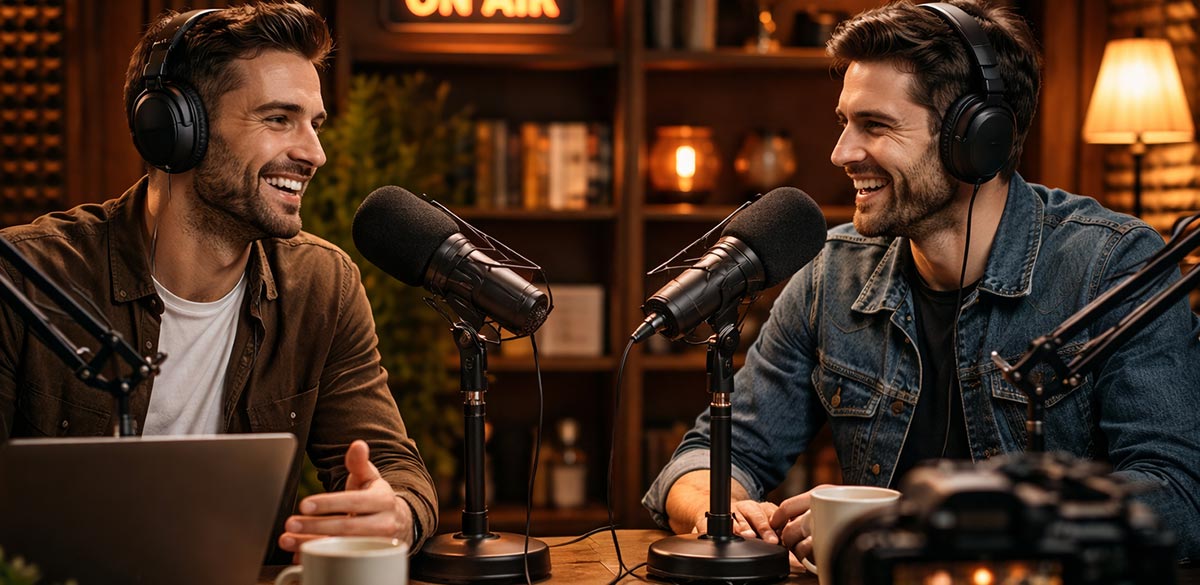
Take podcasts. What started as niche talk shows quietly became long-form storytelling machines. True crime, comedy, interviews, scripted audio dramas — entire careers now exist without a camera ever rolling. Shows are recorded in spare bedrooms, garages, and studios that look suspiciously like closets with microphones.
Yet the engagement is real. The loyalty is real. And in many cases, the storytelling is better than it has any right to be.
Then there’s short-form video. Platforms like TikTok rewired attention spans and proved that a story doesn’t need three acts — sometimes it needs seven seconds and good timing. Comedy, commentary, character work, and even micro-documentaries thrive in a space where pacing is unforgiving and honesty is immediately rewarded.
If it doesn’t work, you know instantly.
If it does, it travels faster than any theatrical release ever could.
And yes — subscription platforms like OnlyFans changed the economics of creators overnight. Not because of novelty, but because they removed the middle layer. No gatekeepers. No algorithms deciding worth. Just audience and creator, negotiating value directly.
It’s not traditional entertainment.
But it is entertainment.
What ties all of this together isn’t technology — it’s control. Creators choosing their format. Audiences choosing how and when they engage. And stories finding the shape that best fits the moment instead of forcing themselves into legacy containers.
None of this diminishes filmmaking. If anything, it reinforces a truth the industry has always known: people don’t show up for formats — they show up for connection.
The camera, the microphone, the phone — those are just tools.
The real shift is that entertainment no longer needs permission to exist. If you can make something compelling, you can find an audience. And if you can hold that audience, the platform becomes secondary.
Cinema still matters.
Television still matters.
But so does the person talking honestly into a mic — or delivering a perfect joke in under ten seconds.
Entertainment didn’t shrink.
It multiplied.
And the audience didn’t leave.
They just spread out.
Same Instinct, New Outlets
Every generation finds new stages. The tools change. The delivery shifts. But the instinct remains the same — to tell stories, make people laugh, share perspective, and feel less alone for a moment.
The screen didn’t disappear.
It just got closer.